Monday, May 12, 2014

A2A C172R...AS REAL AS IT GETS!!!


Sitting there watching the smoke come out of the front of my Cessna was not the experience I had in mind.  The roar of the fire could be heard from inside the cockpit.  Panic set in as a brief expulsion from the cockpit was called for.   The smell of smoke reinforced the notion that the engine of my A2A C172R was on fire.  This was literally, “AS REAL AS IT GETS”. 


Aerosoft's freeware Catalina Island Airport (KAVX)

The day had started out quite differently.  The plan was to fly the remarkable A2A C172 from Van Nuys airport in California to Catalina Island.  This is a typical flight for GA pilots in the Cali area.  Upon gaining a PPL, they load up a rented C172 with the family and fly over to Catalina.  Unfortunately the rough, short, aircraft carrier like runway, can give many of these new pilots an unpleasant surprise.
 
   Orbx's freeware Van Nuys Airport (KVNY)

Flying from Van Nuys, over KLAX, to Catalina, and documenting it with pretty pictures sounded like a great idea.  This would make for a great post on the blog.  All the more I would use the free Catalina Airport from Aerosoft.  This would be supplemented with FTX Global scenery and the FTX Global Van Nuys airport (freeware).  Nothing I like more than good quality freeware.   Both Orbx and Aerosoft should be commended for their generosity in providing highly detailed freeware airports for FSX!


My VFR Flight Plan.


The final day of departure brought perfect weather conditions.  Previous flights to Catalina Island were peppered with constant wind and turbulence.  The flights in the C172 were jittery at best.  This bright sunny morning promised to rectify my previous suffering.  Van Nuys Metar reported 0kts of wind and Catalina reported only minor wind.  


Right wing checks.

My VFR flight plan was thoroughly prepared along with a review of the KLAX special flight rules.  I would pass over KLAX after leaving Van Nuys.  Then head south to be free of the class B airspace.  Once this was accomplished the C172 would be directed towards Catalina Island.   Everything appeared to be going my way as I prepped the C172.


Check to see if there is water in the fuel.

The one thing I love about the A2A products is the realism that Accusim brings.  This technology brings your aircraft to life.   It becomes a living breathing animal.  Its a simulation inside of a simulation, inside of a simulation.  Torture your aircraft with a rough landing in FSX, and you may find yourself suffering for it later.   Actions have consequences with Accusimed A2A aircraft.  Forgetting to do the pre-flight inspection of the C172 can be a bad idea.   Unchecked and weathered hinges can break causing control services to fail.  Maybe not today, maybe not tomorrow, but someday.  


Taxing out.

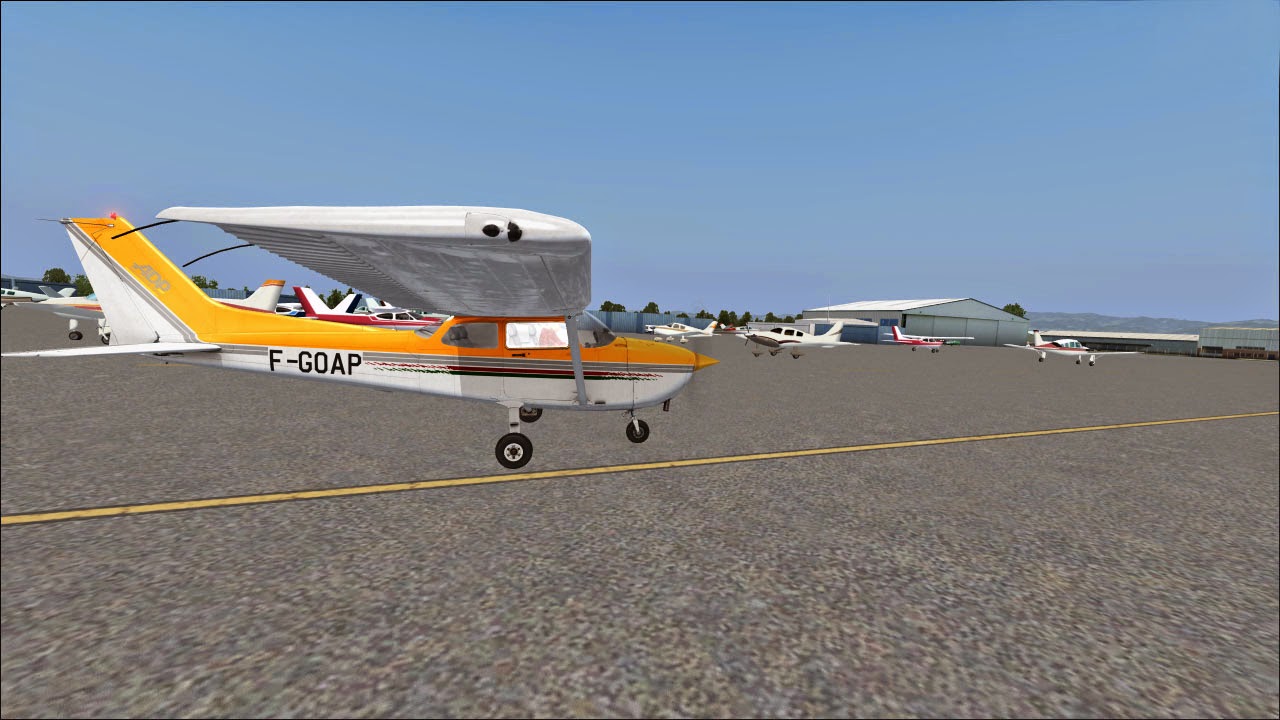
Many of my flights were not done with a pre-flight inspection though.  Yet for this flight, everything was checked outside the aircraft, from the hinges to the fuel.  Once completed the C172 checklist was pulled out.  Before long the engine was started and purring away.  After some brief fiddling with the GPS, I was slowly meandering down the taxi-way.  A large jet could be seen departing off of Runway 16.  A selection of GA aircraft and helicopters stood on display as if saluting C172 F-GOAP as it passed. 


Heading out
Upon reaching the edge of runway 16L, I started my before take-off checklist.  The engine power was increased to 1800 rpm for the mag check.  This called for switching between the magnetos, making sure there was no drop greater than 150 rpm between them. Unfortunately that is exactly what I found when switching to
Mag 1.  The decrease when switching to Mag 1 was greater than the allowed 150 rpm!  This was not in the plan for the day.  My guess was that extra fuel was clogging the engine and spark plugs.   This was surprising though as the mixture had been leaned while taxing.
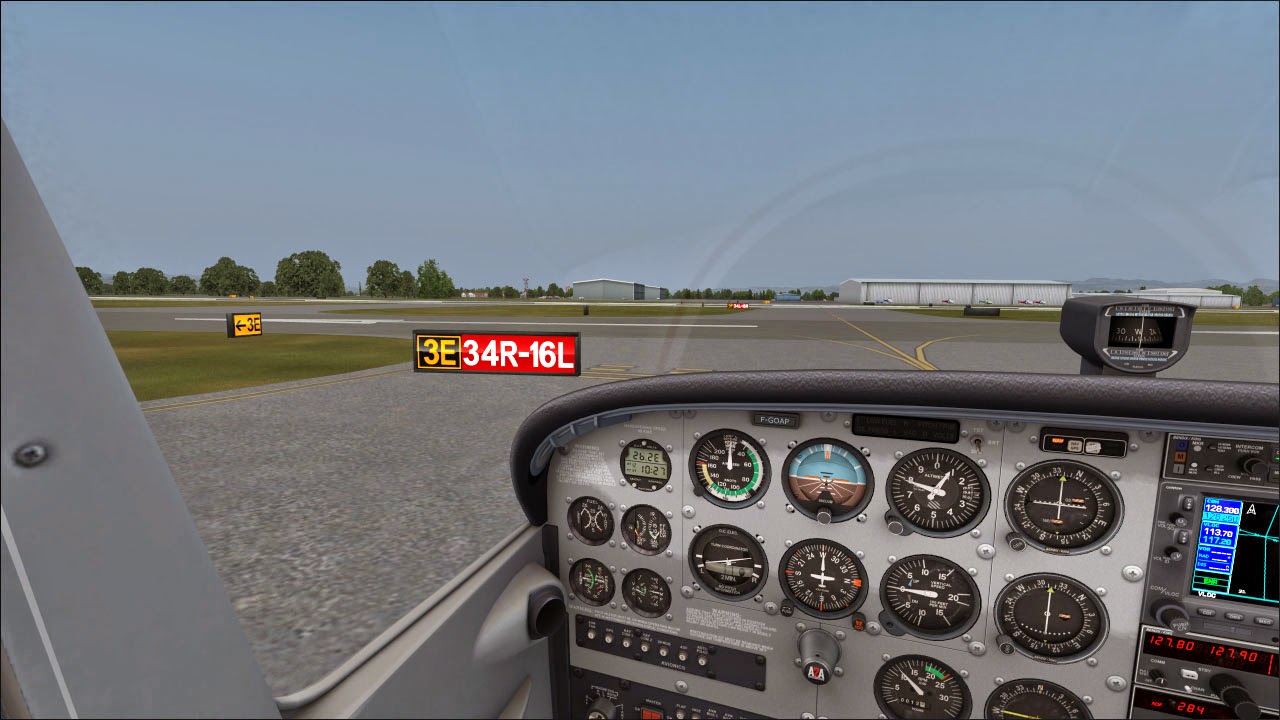

Going through the before takeoff checklist.

           The throttle was pushed forward and the engine came to life.  This should clean out the old pipes I thought.   After a few moments the mag check procedure was done again.  There was still a large decrease in rpm when switching to Mag 1.   Ok, well, I’ll fix this... as the throttle was pushed forward again.   I’ll run it a good long time now!    But the mag check still failed?  To make matters worse, the quick check of A2A C172 notes section showed the engine temperature was getting high!! (Red, Red, Red!!!).

Mag check.


In a moment of stupidity the throttle lever was pushed forward again…  Get-there-it-is was calling me. After a good long time, the already over heated engine still failed the Mag check.  With defeat in my eyes, the A2A C172 was turned around and slowly driven back to the closest GA ramp.  Going to have to shut her off and pop the hood, I thought.  


This can't be good!

As the engine shut off, the fireworks began.  My guess is that the wind from prop was keeping the over-heated engine from popping.   Once those blades stopped turning the flames started churning. Game over, as smoke started to billow out of the front of my C172.

A2A C172, A little "To Real"!


Once the flames were out, the C172 was brought into the hanger.  There a very unhappy story unfolded.  My engine had bad plugs, a fuel leak, poor compression, low oil, and even loose flaps.   
This took a lot of mouse clicking, trying to rectify each problem.  If I had done this in the real world, the consequences would have been great!   But in the virtual world, all I lost was my pride.   My Accusimed C172 begged to be treated like the real thing, with love and care.   Unfortunately she had only received harsh treatment and reacted accordingly.

This is bad, real bad...

Luckily, a lot was gained from this experience.   The plane should have been checked in the hanger before pre-flight inspection.   I barely ever checked the plane in the hanger even after logging a lot of hours.  The engine should never have been run up so high for so long.  Research should have been done to find out what "real" pilots do when a mag check fails.  As a penalty the virtual flight for the day was cancelled.


Score:    The A2A C172   1   :  DeskPilot 0


Some might find the Accusim features of the A2A C172 an annoyance.  Heck, who wants to worry about engine temps, water in fuel lines, and loose hinges?  Can’t I just overheat my engine?  I have to admit that at times these features can be an annoyance.   Yet on the flip side, there is a pride that comes from prepping and flying the A2A C172 correctly.   There is an acknowledgement that you have to take care of your Cessna just like it was real.  Real pilots know to have their plane checked in the hanger on a regular basis.   While I am not a real pilot, I revel in the ability to learn about aviation and what “real” pilots experience.   To us desk pilots, the A2A C172 is “as real as it gets”, and in my case, that is a good thing!

Links:

A2A C172 with Accusim

Aerosoft Catalina Airport (Freeware)

FTX/Orbx Freeware Airports including Van Nuys Airport for FTX Global users.


Wednesday, April 30, 2014

The Airline Pilot Guy Podcast, a view into the cockpit.


APG podcast, playing on the old Ipad.

There is nothing more enjoyable than learning about the world of aviation straight from the horse’s mouth.  That is exactly what you get with each podcast from Captain Jeff (The Airline Pilot Guy).  The Captain is a real world pilot for a US legacy airline.   For obvious reasons, Captain Jeff does not disclose his employer. 
But we do know that he is currently employed as a captain and  he flies the Mad Dog MD82.    His motto is "The view from my side of the cockpit door".  


The typical Airline Pilot Guy podcast is about 2 hours long.  Each podcast is filled with many tidbits of information.   From Captain Jeff, we get a feel for what it really is like on the other side of the door.  We get the inside scope on the latest aviation news from accidents to changes in the airlines.  Captain Jeff regularly chats about everything from his latest flights, to his views on the airline industry, and aviation as a career.  He speaks many times about his concerns regarding the use of automation and safety in general.   Not to mention we also get a glimpse into his old days flying for the Air Force and flying the Tristar L1011.
       Captain Jeff's website

There are three requirements that I have for subscribing to a podcast.   The podcast must be produced on a regular basis, well produced, and well organized!  The Airline Pilot Guy’s podcast fulfills each of these requirements and then some.  Each week a new show is produced and ready to download and the sound quality is always good!  Captain Jeff rarely drones on about any topic.  His show is well organized with a news section, updates, and listener questions and feedback.   The fact that some shows are almost 2 hours long is an added bonus.  
While Captain Jeff is not a flight sim enthusiast, he fields  many questions from flight sim fans on his show.  Flight simulation has been discussed numerous times on his podcast and Captain Jeff has shown his admiration for it.  On a personal  level, flight simulation for the good Captain consist of being tested in a large metal box on what he might or might not, do wrong.   Simming, is not a fun part of his job, as he would probably say.     
                                                           Airline Pilot Guy on Youtube


As aviation enthusiast, we almost owe it to ourselves to subscribe to Captain Jeff’s podcast.   For aviation enthusiast such as myself and others, the PC flight simulator opens the door to the world of airline aviation.   We love to pretend we are captains of airliners like the MD82, 737 and 777.  But Captain Jeff’s podcast slams the door open with a lot of firsthand knowledge about what it is really like to be and airline pilot.   We also learn about all the real world responsibilities he has to shoulder.
Personally, I really enjoy when Captain Jeff discusses the recent aviation accidents and events.  His discussions about the Malaysian Air and the Air Asiana  accidents have been very insightful.   For example, he was the first person I know of to point out that a lot of the CNN reporting related to the disappearance of MH370 was full of a lot of BS.
Aviation related links on the APG website.

A good point that Captain Jeff made was that many of their so called “Aviation” experts had no real background in aviation at all!  Some of us flight simmers probably had more qualifications.
 I would bet that few of the PMDG T7 flyers know more about the 777 systems than some of those CNN jokers!

Captain Jeff has been quite vocal about the dangers of automation.   As he would say, "disconnecting the auto-pilot at 500 feet AGL before landing, is not flying" (Heavily paraphrased).
While he might laugh, (because I am not a real pilot), I have tried to follow Captain Jeff's advise in the simulator by disconnecting the autopilot in the Majestic Dash 8 in FSX, when ever possible.  My landings in the Q 400 might not be greasers, but many of them have been hand flown, greatly increasing my ability and confidence.

Hand flying the Q into EGBB

So I advise every aviation enthusiast to head over to the Airline Pilot Guy website at www.airlinepilotguy.com .   The website also includes various aviation related links relevant to each show!  Its worth mentioning that Captain Jeff has active communication with fans through Facebook.  You can also donate to Captain Jeff's Coffee Fund which helps pay for the cost of hosting the show and equipment.   Given the Captain's donation to the aviation community, that is money well spent!

The Airline Pilot Guy show can be downloaded from ITunes and Stitcher.    Episodes can also be found on Youtube.

Links:
www.airlinepilotguy.com
Airline Pilot Guy on Itunes
Airline Pilot Guy on Stitcher.com
Airline Pilot Guy on Youtube
Airline Pilot Guy on Facebook.

Wednesday, February 26, 2014

From Scotland (EGPH) to Norway (Envz) in the Q400, for Intercity Airways.

A rainy morning at Edinburgh


With a strange obsession, I contemplated landing at Sola Airport (ENZV) in Norway.  The thought of landing along a coastline amid fjords and mountains, sounded intriguing.  Of course the ever changing bad weather along the Channel could be counted on.  With excitement, I planned my Intercity Airways trip from Edinburgh (EGPH) in Scotland, to Sola Airport (ENZV) in Norway.


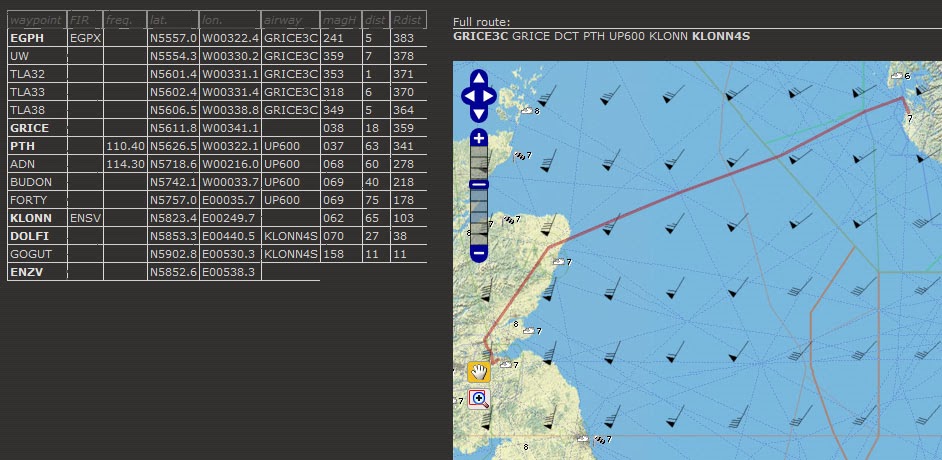
Flight Plan thanks to Vroute Premium

Flight ICX278 was set to take off from Edinburgh at 7:30 am.   At 6:30 am, preparations in the cockpit of the Dash 8 were started.   Of course the morning gave the usual British Isles weather of clouds, rain, more clouds, and a bit more rain.  While prepping for the flight, heavy rain could be seen pouring over the windshield.  My sympathies went out to the ground crew.   But for my duties, the projected weather at Sola was of utmost concern.  The prediction at Sola was no clouds above 1500 ft and 9999m visibility.  This would be perfect for hand flying the Q on final. 


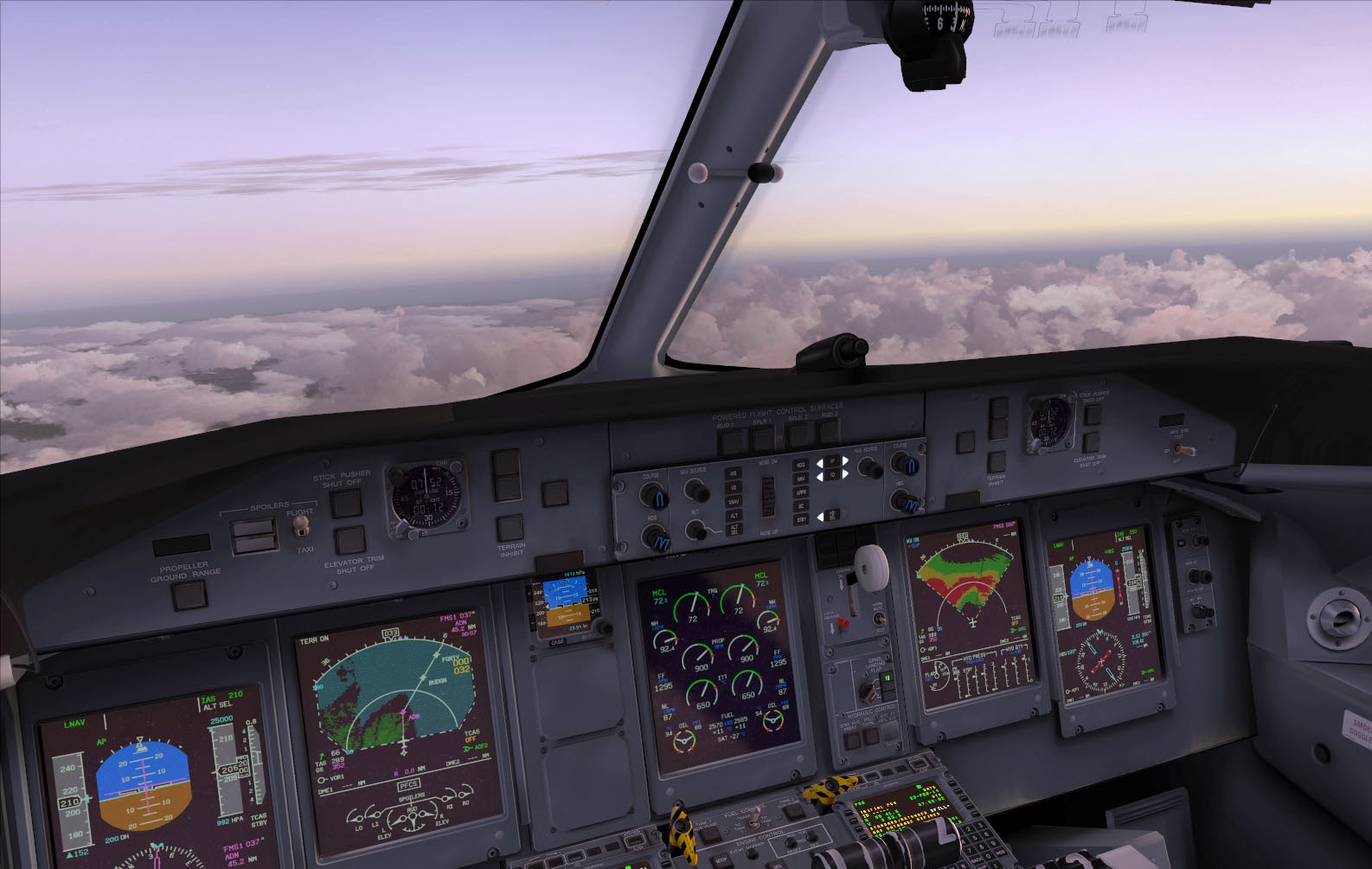
GRICE3C on the ND

EGPH ATIS stated that RW24 was in use for landing and departing.   Once the basic flight plan was placed in box, I set the departure for RW24 using the GRICE3C SID.  This would shoot us North towards the GRICE waypoint, after a sharp turn from our RW24 heading.   From there we would head to the ADN Vor.  Once there, we would leave merry Scotland, flying over the channel towards Sola.   Given the predicted 60 minute cruise time, I did not start browsing the STAR charts for Sola.  My guess, given the reported winds at Sola, was that we would be using runway 18.

Leaving the gate after pushback.

At about 7:20 AM we started the push back procedure from EGPH gate 100.   With the GPU disconnected, push back began.  With the roar of a lion, engine 2 was started.  Once the parking break was set and the clearance checked, engine number 1 was started.  The sky was now afire with different hues created by the rising Sun.   We slowly started our taxi with lights blinking, as we waved goodbye to the RyanAir 737 parked near us. 

Windsock at the beginning of RW24

While cruising down the taxiway, a small GA aircraft could be seen landing.
A look at the wind sock at the beginning of RW24 confirmed the fact that we would be taking off into the wind.  In the Q, standby hydraulics, auto-feathering, flaps 5, and the weather radar were set.   The rain had stopped, as if to say, I will let you pass.  Lining up with Runway 24, I gave a brief check of the instruments, PFD, and ND. 

Ready for Takeoff!

 With taxi light off, landing lights on, I slowly pushed the throttles forward.   The turbines came to a loud roar as we accelerated almost a jet speeds down the runway hitting our Vr with quick succession. 

Rain with a view.

Climb out was anything but boring!   The Q headed up at around 155kts till 1500 AGL was hit.  From there, 185kts and 900 rpm were set.  Autopilot was then activated allowing the Q to follow the SID.   I knew what was coming after a quick glace at the radar.   As the Q climbed towards a suspect cloud, rain started to pour at us.  All the while the visibility came and went with the drop of the hat.  One minute I was getting a nice view of Edinburgh, the next minute it was gone in a haze of white. 

By FL100, we were through the thick of it.

By 10000ft we were through the thick of it.   The expected ice buildup was detected and steps were taken to combat it.  Soon we were on our way towards FL250 leaving the clouds and rain below us.     

Just before the ADN Vor and leaving Scotland.

At FL250, the Q was set for MCR, 850 rpm, and 60% trq.   Below the clouds, spots of Scotland could be seen here and there.   Soon we hit the ADN VOR, leaving Scotland all together. 

Across the Channel at FL250

While heading across the Channel, the clouds obscured much of our view below.
 With a strong 60 kt tailwind, the Q was making very good time.  The long 1 hour cruise I predicted, now looked more like 30 minutes.  I started to pour over the approach plates and set us for the KLOON3S Star.    KLOON3S would takes us northwest of RW 18 at Sola. 


The plan was to use the Q’s VNAV to reach 2000ft, 5 nm, before the RANAB waypoint.
This waypoint is directly north of the RW18 ILS.   Once free of the cloud deck, I would disconnect the AP and hand fly the approach.  Hopefully this could be done the minute I was free of the BKN032 clouds.   

ENVZ METAR  1801KT 9999 -RA FEW015  BKN032  07/05 Q1001

You may ask.. “Why hand fly the Q?  Why not just use the heading and approach mode to lead straight to the runway, and disconnect at 500 AGL?”    My answer would be that I am preparing myself for the times that automation does not work.   Our reliance on automation can bite us when we are not prepared.   Unfortunately recent real-world accidents have shown this to be true.  Yes, automation does have its positives.   But to much reliance on automation comes at a cost.  In the US, the FAA has stated that it would like pilots to reduce automation when possible.  I can tell you, that since I have been spending more time hand flying the Q400 , my compentence with the aircraft has increased.  

Descending into sinister looking clouds.

Competence aside, I was faced with a bad feeling in my gut as the Q started the decent.   The cloud layer below was so thick that the coast of Norway could not be seen.   Thanks to the FMC, the approach was nicely marked on the navigation display.   But as the Q flew into the first thick layer of clouds, I felt like Bilbo Baggins from the Hobbit, slowly descending into the dragons layer, not sure what to expect.   Before long, all visibility was gone.  The autopilot flew the route, as I silently prepared the Q for landing. 
    
Zero visibility before reaching FL100

Now my confidence eroded.  "Should I disconnect the AP"  "What if there is turbulence" "What about the 19kt headwind on final".   Trying to gather my thoughts, I concentrated on slowing the Q down, and preparing the cockpit.   Rain started to hit the windshield.   Finally, after 3500 feet, the clouds started to breakup and the coast of Norway could be spotted.

The auto pilot is disconnected.

Just as predicted, we were through the thick of it by 2000 feet.    Now, only 5 miles from RANAB, I shut off the AP.   My hands started to sweat, as they tightly gripped joystick.   Flaps and gear were deployed as I slowed the Q,  trying to stabilize before the turn to final.  

On final for RW 18

Just before RANAB, the turn to final was commenced.  The runway was now visual.   With intense concentration, the dance began with the trim and throttle lever.  Reducing throttle, then adding it, then reducing a bit.   The glide slope and papi lights helped guide the descent.   The Q hovered around 130 kts on final, smoothly approaching Runway 18.   With much ado the Q finally planted its legs on the runway.   The reverse thrust and brakes soon brought us to a slow paces as we vacated the runway.   My job was done, and the 1.5 hr ACARS flight was submitted.   

  Rain starts to come down as we vacate runway 18 at Sola (ENVZ)

Software used:  FSX Gold edition, ASN, REXE, FTX Scotland, Vroute Premium, Intercity Virtual ACARS, Majestic Software Q400 Pilot edition.


Tuesday, February 4, 2014

Flying the Q400 from EGPH to EGBB.


Edinburgh Airport (EGPH) is located 5 nm from the city’s center, just off the M8 motorway.  The airport is the fifth busiest airport in the UK.   The city itself offers a lot for the tourist, given its historical sites and educational institutions.  Edinburgh is also the second largest financial center after London and the seventh most populous city in the UK. Therefore it is no surprise that EGPH is a hub for the virtual airline, Intercity Virtual.


Parked at gate 23 at EGPH

 The regional Intercity carries virtual passengers to and from the capitol of Scotland.  From EGPH, virtual passengers can reach the various other Intercity Hubs and Intercity destinations.  A quick trip across the channel to Sola Norway for example, or a quick trip to Amsterdam.  But for my last flight, a rather tame trip to Birmingham was flown.   Literally a hub to hub route with only 246 nm to be flown.


The flight plan from EGPH to EGBB prepared by Vroute Premium.

Route:
TLA5G TLA N864 DCS N615 CROFT CROFT.CHASE3B

The main route from EGPH to EGBB was already stored into the box.  ATIS stated that runway 6 was in use due to the winds.  After setting runway 6 for take off, a large amount of time was spent preparing the expected landing.  Given the 7 kts winds reported from 180 at EGBB, I expected our arrival runway to be RW15.  This was plugged into the box.


GPU hooked up to the Q


I also punched up the RNAV approach to RW15 for visual reference.   Given the low cloud ceiling going into Birmingham, I expected an ILS approach.  My plan was to disconnect LNAV navigation just after hitting PEDIG.   From there, I could use the heading select to capture the ILS.    Charts were mulled over and prepared.  It must have seemed like forever to my 71 virtual passengers before pushback. Unfortunately, things happen fast when traveling in the Q.   You don’t have hours to prepare.  For many of these flights there is very little cruise time.   Hence, it is good to prepare in advance! 


Leaving the apron.

Soon, we were pushing back and firing up the Q400's turbine engines!   There is nothing like the sound of those engines firing up!  As I taxied out to the runway, various other aircraft could be observed moving about.  A Ryanair jet could be seen taking off from runway 6.  From the South Apron, a left turn was made, and then the long haul down the alpha taxi way.  This gave me time to prep the Q for take off.  5 Flaps was set, weather radar was turned on, condition lever were checked, standby hydraulics and auto-feathering activated.    

  EGPH Runway 6

Soon, we were lined up with runway 6.  The bleed flow was set to min, the taxi lights shut off, and landing lights turned on.   After being cleared, we accelerated down the runway, looking for our V rotation of 132 kts.  Once positive rate of climb was obtained, the gear was retraced.   The Q climbed at about 155 kts up to 1500 AGL.   From there I activated LNAV, and we climbed at a set 185 kts to 10,000 feet with 900 rpm.

Climb out from EGPH

Climb out brought the usual clouds, low visibility, and ice!   These are the three things you can expect when flying around the UK.   Clouds, low visibility, more clouds, more low visibility, along with more clouds.   I quickly turned on the ice-protection equipment.   The low visibility, clouds, and slight turbulence, were no issue thanks to the autopilot.  I monitored our sharp turn from RW 6 to the TLA VOR  with checklist in hand.   At 10,000 feet, the IAS was set to 210 kts, and  we cruised up to FL250.


Cruising at FL250

Upon reaching FL250 the condition levers were set to 850 rpms.   The Q cruised along at about 320 kts TAS with only a slight 13 kt wind off the right side.  I set about preparing for the approach and VNAV descent.  I set the VNAV to hit 2800 ft at 5 miles before waypoint PEDIG.  This would ensure a good height for intercepting the EGBB runway 15 ILS.  I was hoping for a manual approach but clouds would be a problem till descending to 1300 feet.   The good news was that visibility would be very good once under the clouds.

EGBB Metar:   EGBB 18009KT 9999  FEW013/// SCT023///BKN042/// 05/04 Q0981

The ND showed a TOD just after the CROFT waypoint.  Before relaxing to view the sunset off to my right, the ILS frequency and ILS heading were set.  After that, I sat back and waited for the TOD to be reached, enjoying the views.

Descending to PEDIG waypoint.

Once the TOD was reached, VNAV was activated.   This called for a major reduction in thrust.   I tried to maintain 250 kts on the way down.  After 10,000 ft, I maintained about 200 kts.   The 122 kt, V approach was already calculated for a flaps 15 approach.  The landing lights were turned on, along with standby hydraulics, auto-feather, and the other checklist goodies.   Luckily the Q did not build up any ice on the way down!

 Turning to intercept the ILS after PEDIG
Once PEDIG was reach, HDG mode was selected and the Q was guided to intercept the ILS.   The first set of flaps was activated as the Q slowed to around 150-160 kts.  The thick layer of clouds at 4000 feet had just been cleared, but there were still the scattered clouds below.

On final approach.
The ILS was intercepted with APP mode activated.  The ILS localizer and glideslope were followed down through the clouds.   This brought very poor visibility and turbulence before reaching 1200ft.   But by then, the flaps and gear had been deployed.  

Landing EGBB Runway 15
The autopilot was disconnected at around 1000 feet AGL.  Unfortunately, I came in a little too fast...  about 20-15 kts to fast.   But a last minute pull back on the thrust levers allowed for a safe landing.

 Taxing at EGBB
Once on the ground, the landing lights were shut off and the taxi lights turned on.   The T taxiway was followed.   Considering the Birmingham airport only has one runway, it is very easy to find your way around.
The was a lot of activity brewing around the northern terminal.

Diagram of Birmingham Airport (EGBB)

It is important to note that the UK2000 Extreme version of EBGG fixes an important change to the airport.
The FSX version includes the old second runway.   But the airport was completely redeveloped by the year 2000.   Thankfully the UK2000 version shows the airport as it would appear today with only runway 15-33.  Not to mention the amazing details that UK2000 version also adds!  My guess is that FTX England probably corrects the runway problem too.  But luckily I was able to implement all my UK2000 airports into the FTX scenery.

Parking at 85R


Conclusion:
I thankfully parked the Q, set the breaks, and began to shut down the systems.   The flight had gone well and was submitted via the Intercity Virtual ACARS.   Preparing for the approach back at Edinburgh had been a good idea.  Hopefully for one of these trips there clear weather.  Then I can truly enjoy the scenery of the Britain and Scotland.   But luckily ice and turbulence had not been as much of a bother.  It was also nice to get to use both of the two UK2000 airports installed on my computer (EGBB and EBPH UK2000 extreme).    

Software used:  FSX Gold edition, ASN, REXE, FTX England, FTX Scotland, Vroute Premium, Intercity Virtual ACARS, Majestic Software Q400 Pilot edition.